Fall in love with your kitchen again
Tired of white kitchens? Six kitchen styles with more character, from walnut and statement stone to stainless steel, navy and black, with ideas for a Singapore home.
Walk through enough renovated flats in Singapore and the same kitchen keeps appearing. White cabinets, a white or pale grey counter, white tiles and a neat row of downlights.
There is nothing wrong with white. It goes with everything, and it makes a small kitchen look bigger. The trouble is that it tells you nothing about the people who cook there.
This weekend we went looking for kitchens with more character. We read architects’ portfolios and design magazines, and we kept the kitchens we would want to cook in. These are the six ideas we kept coming back to. None of them needs a bigger kitchen, only a braver choice of material or colour.
Walnut and Dark Timber
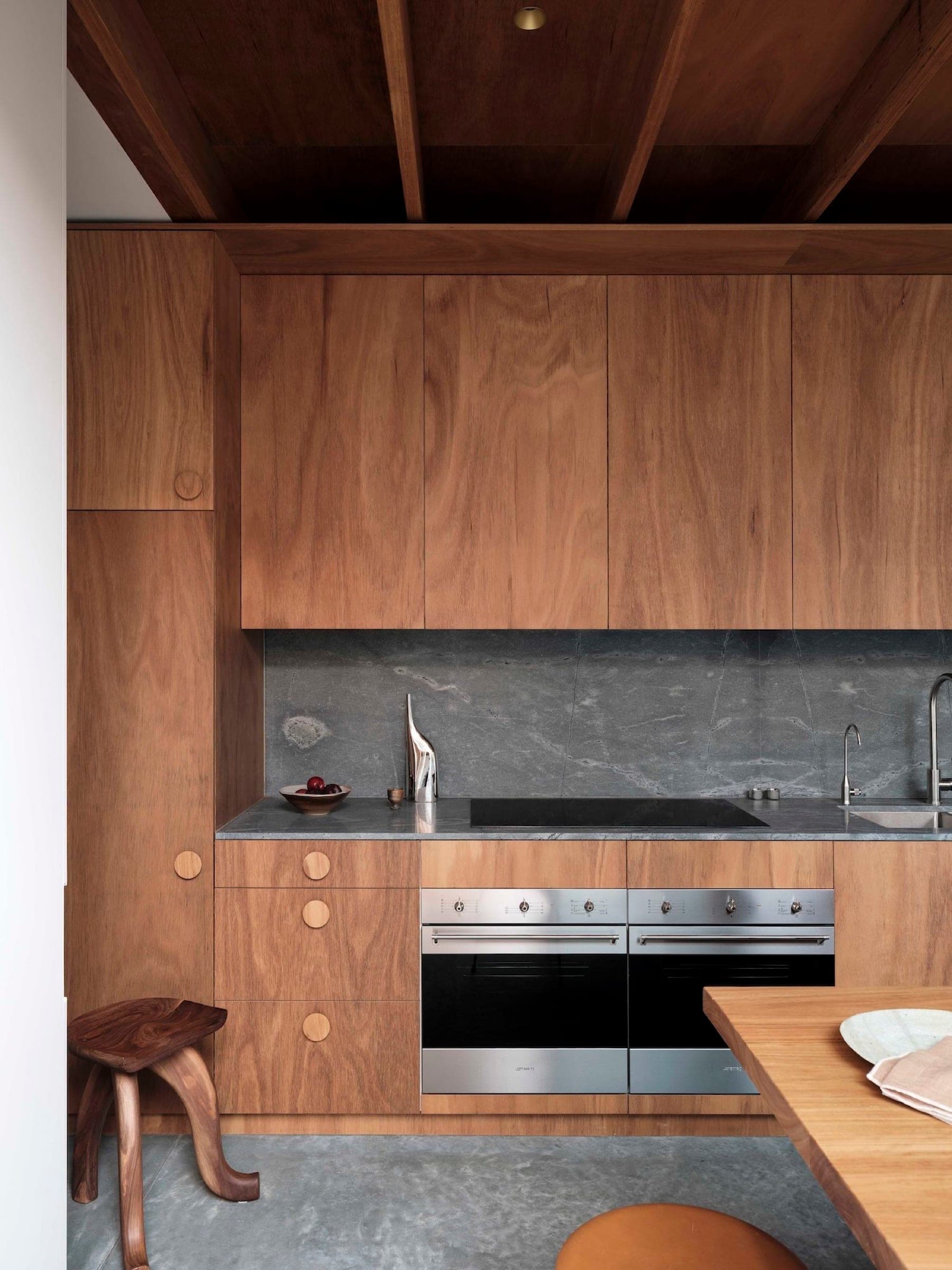
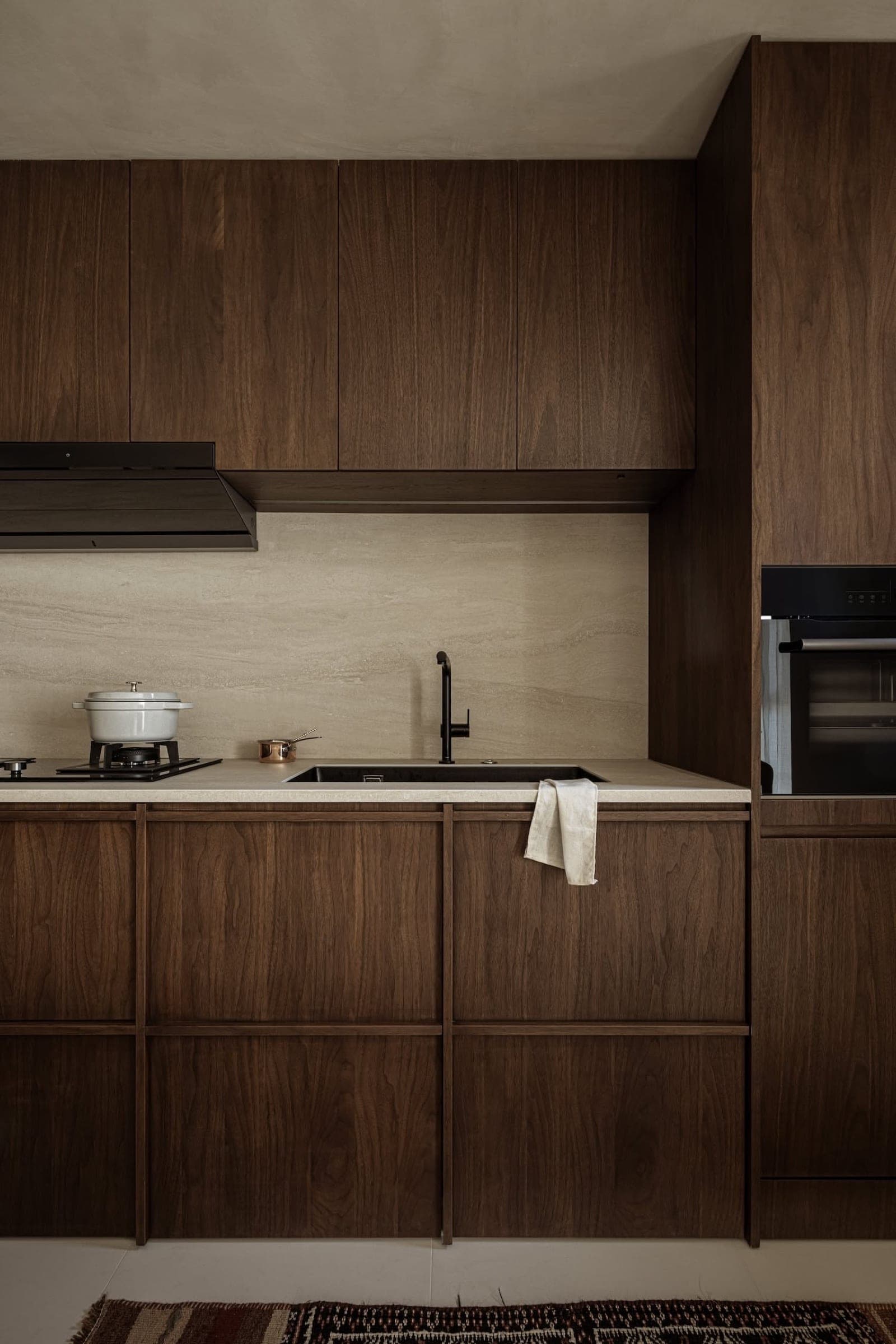
Pale oak has been the safe choice for years. Walnut is its darker, warmer cousin. The grain runs in long brown streaks, and the colour slowly softens in the sun.
A kitchen made only of walnut can feel heavy. The kitchens here pair it with something plain, such as grey stone, white plaster or a pale floor.
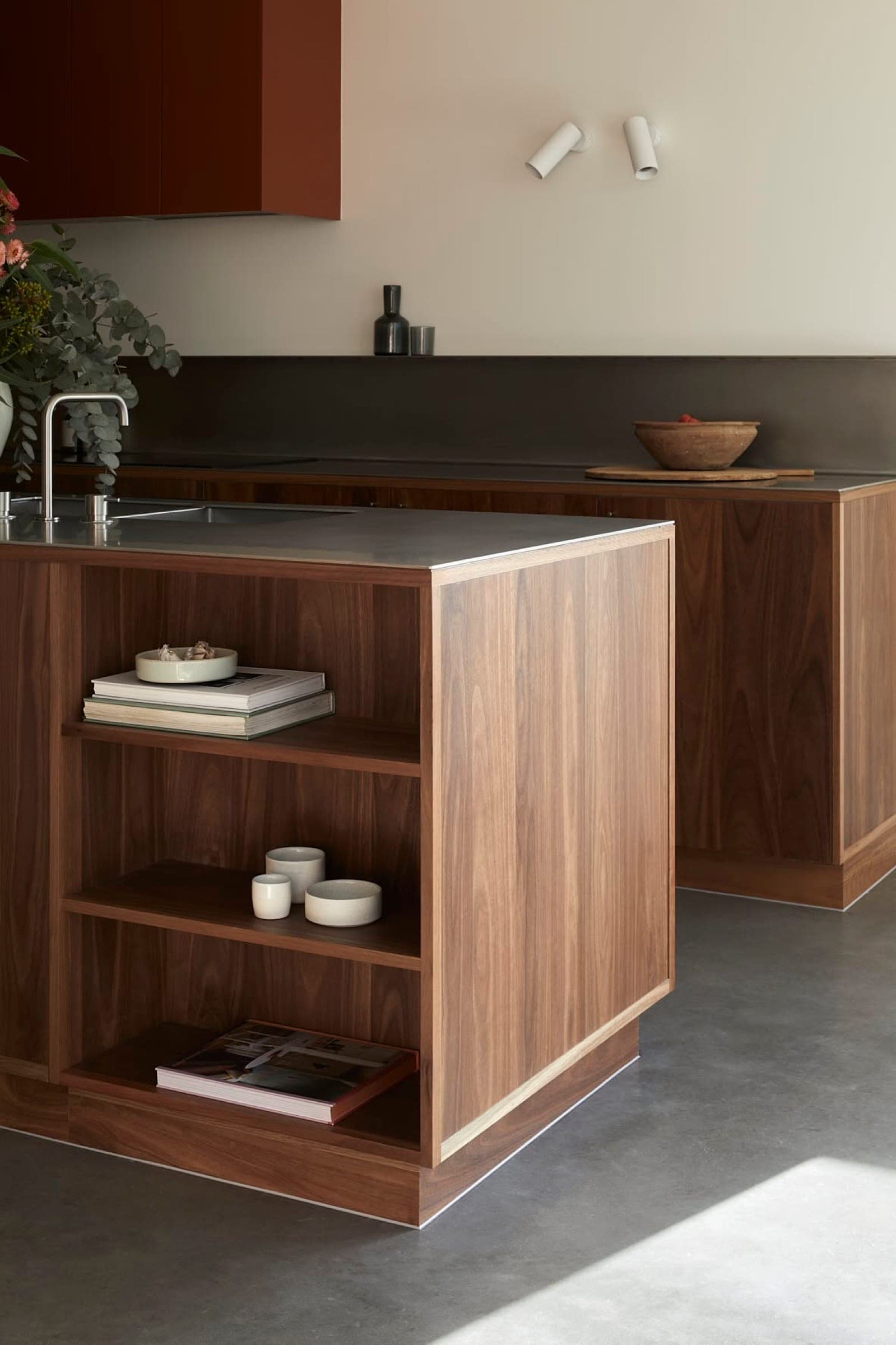
Timber near a sink needs care in Singapore’s humid air. Ask for walnut veneer on a moisture-resistant board, with a finish that you can wipe clean.
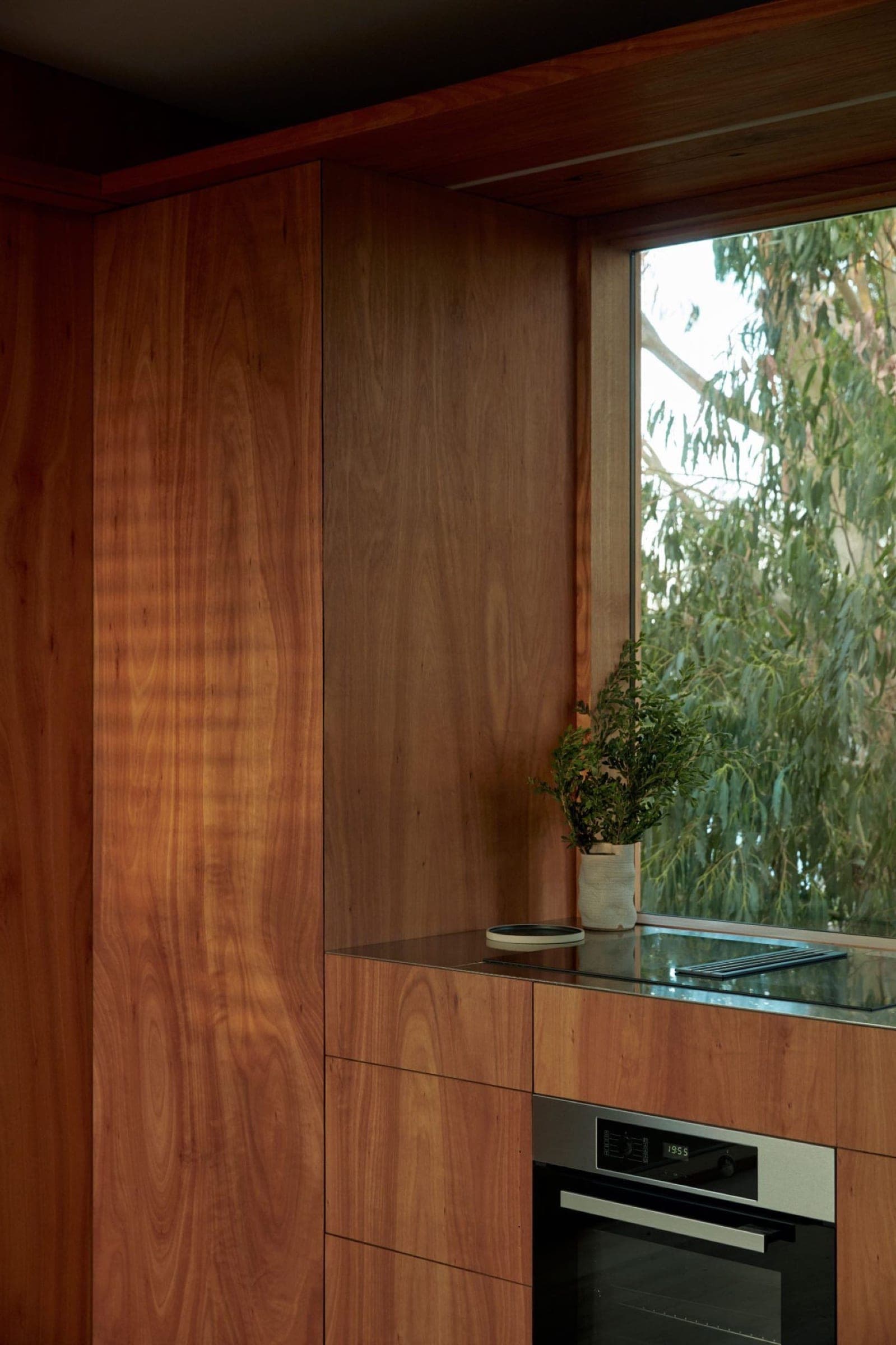
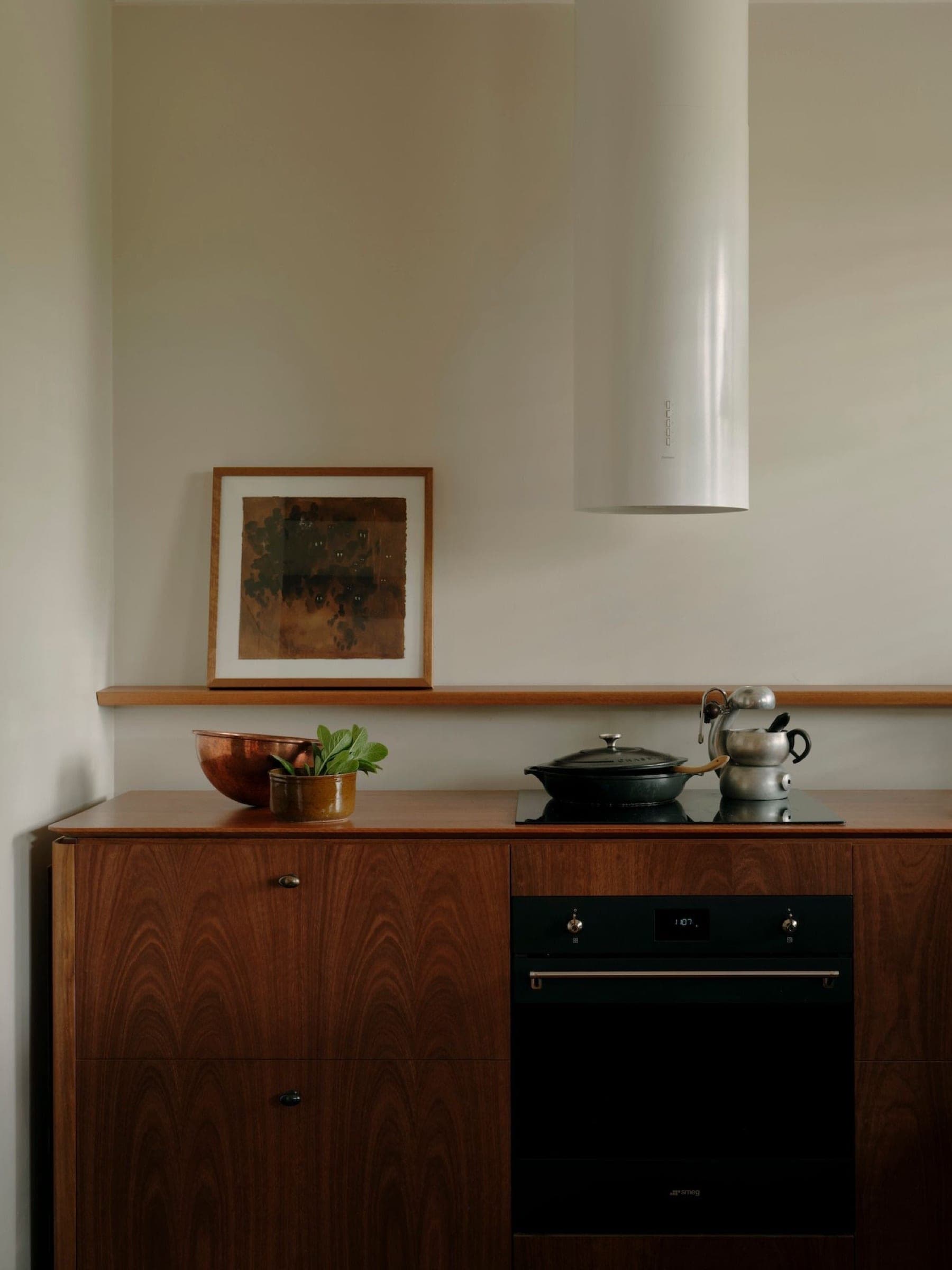
Start with the lower cabinets in walnut and keep the wall above them plain. Choose a grey stone or steel counter, so the wood is the one warm thing in view.
Statement Stone
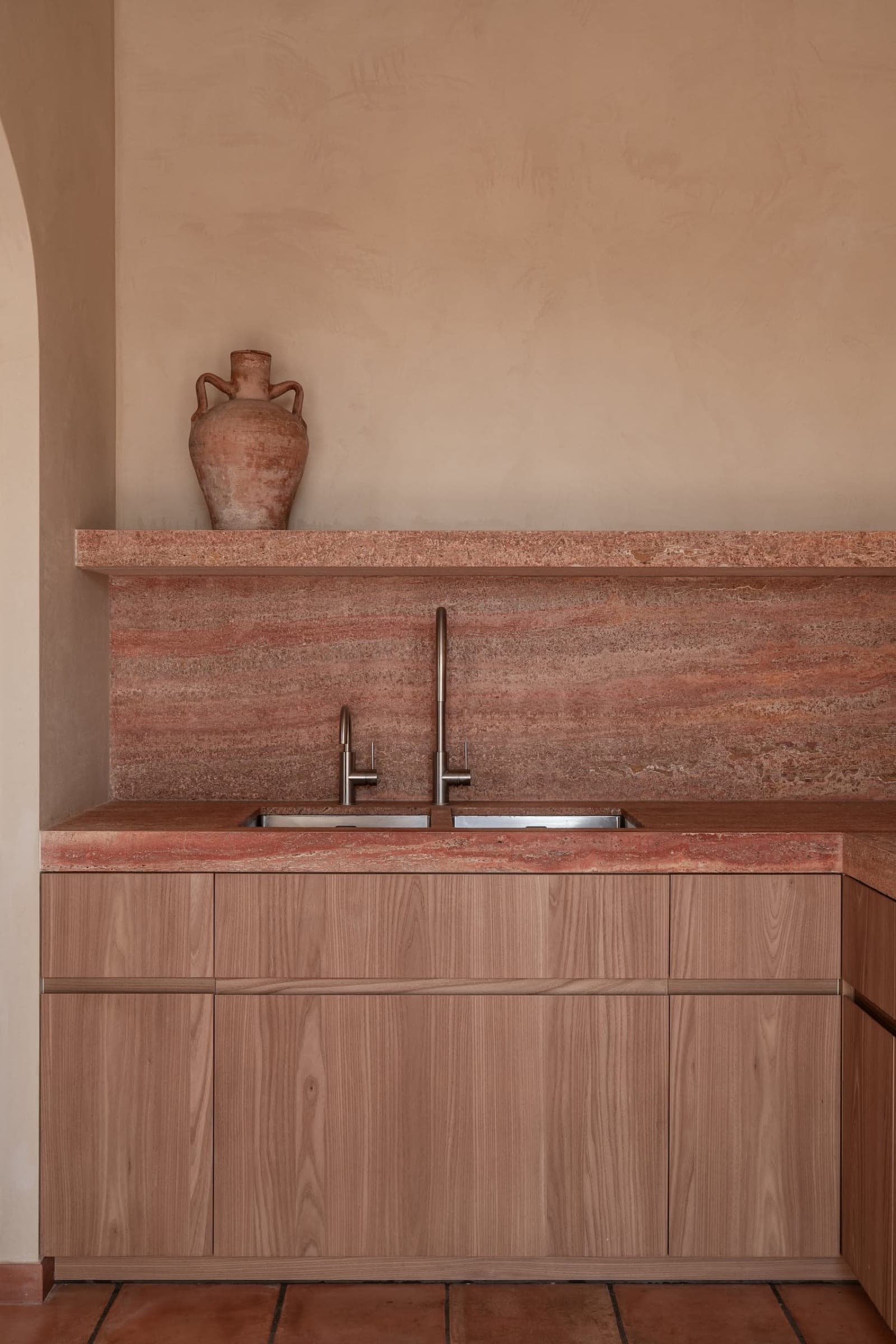
For years the safe counter was white quartz with a faint vein. Statement stone goes the other way. One slab with real colour and movement becomes the centre of the room.
The kitchens here use red travertine, white marble with heavy grey veins, and two green stones. Each one keeps the room around the stone quiet, with plain doors and no other pattern.
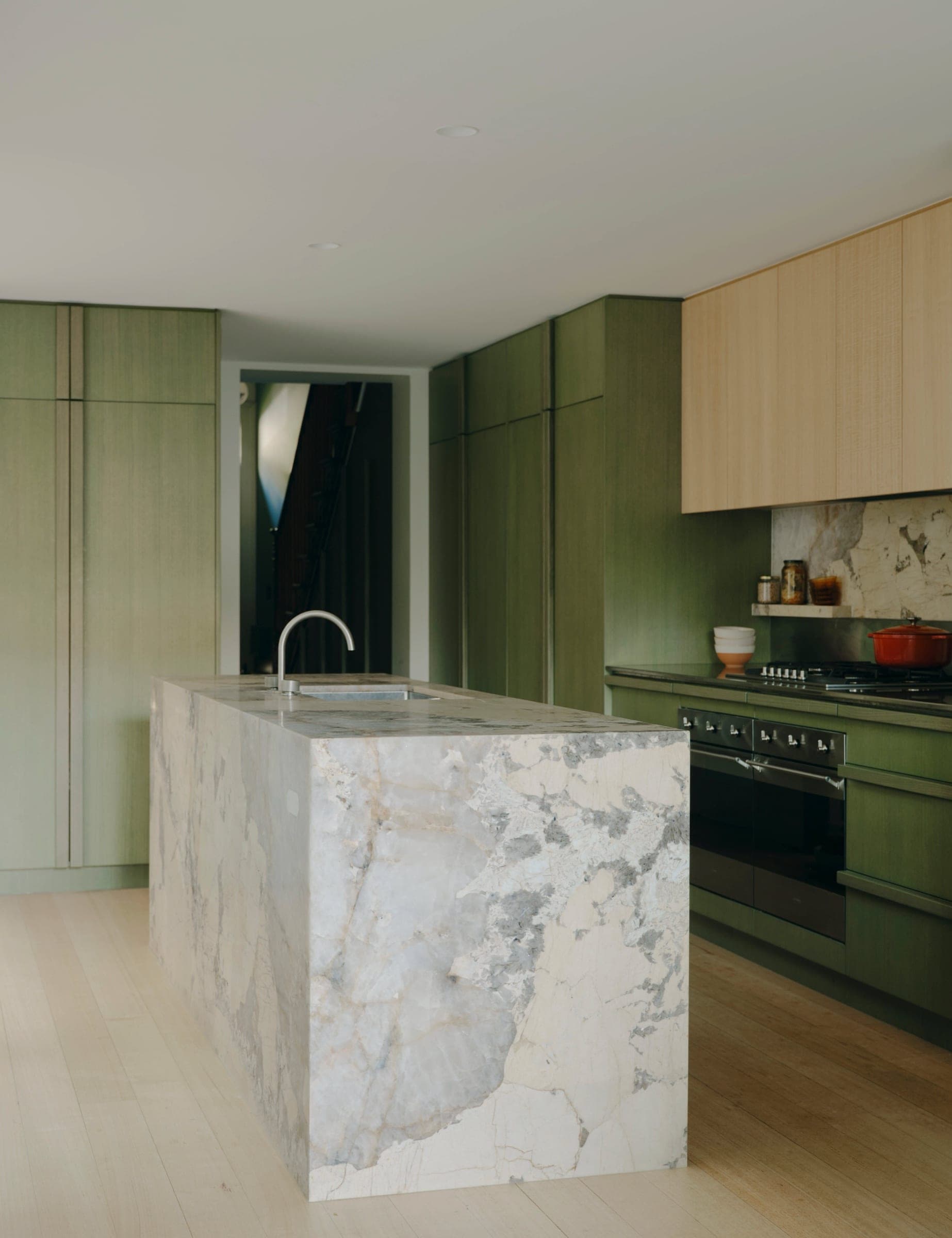
Natural stone needs more care than quartz. Marble and travertine are soft and porous, so lime juice, vinegar and wine can leave marks. A good sealer helps, and many owners come to like the marks.
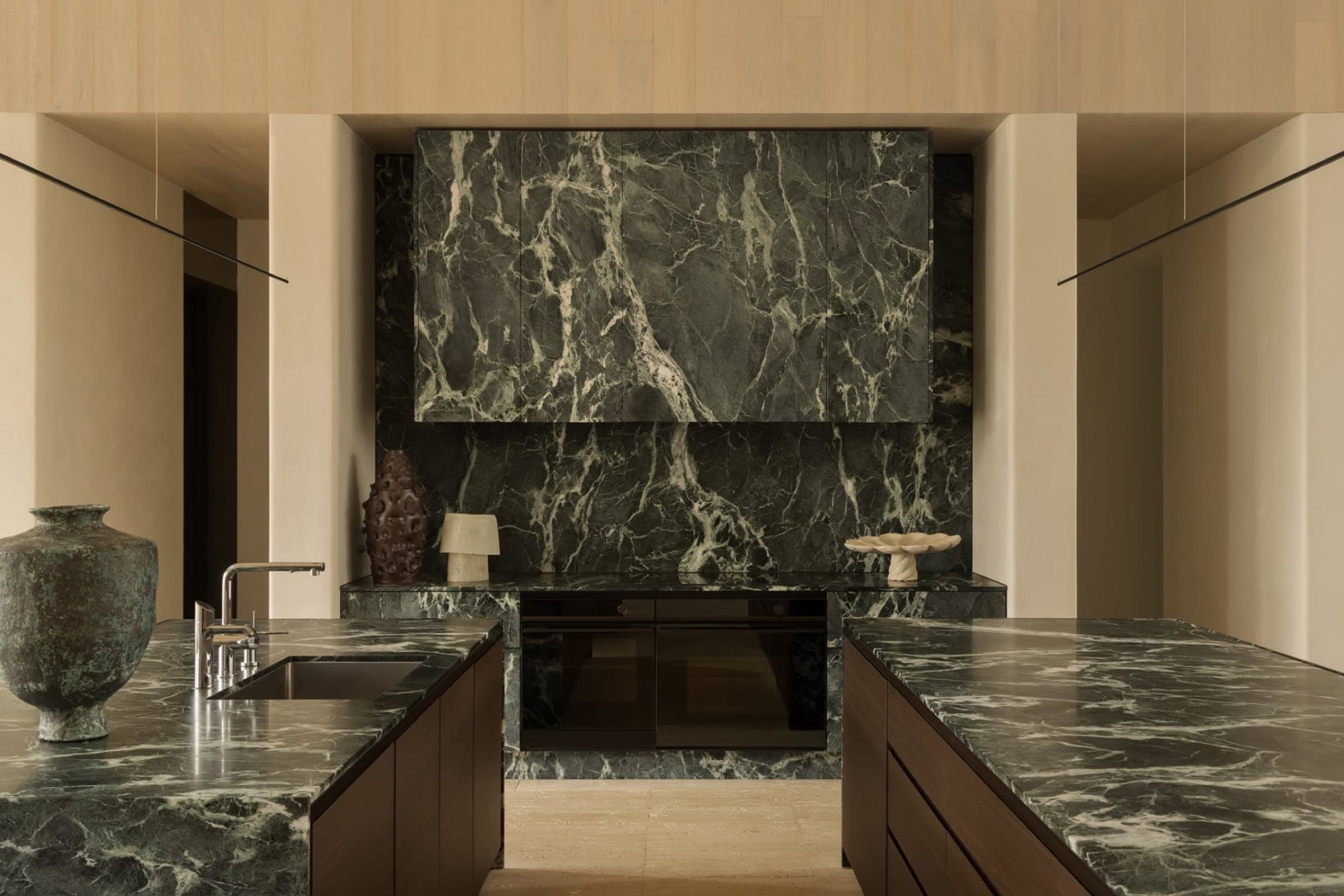
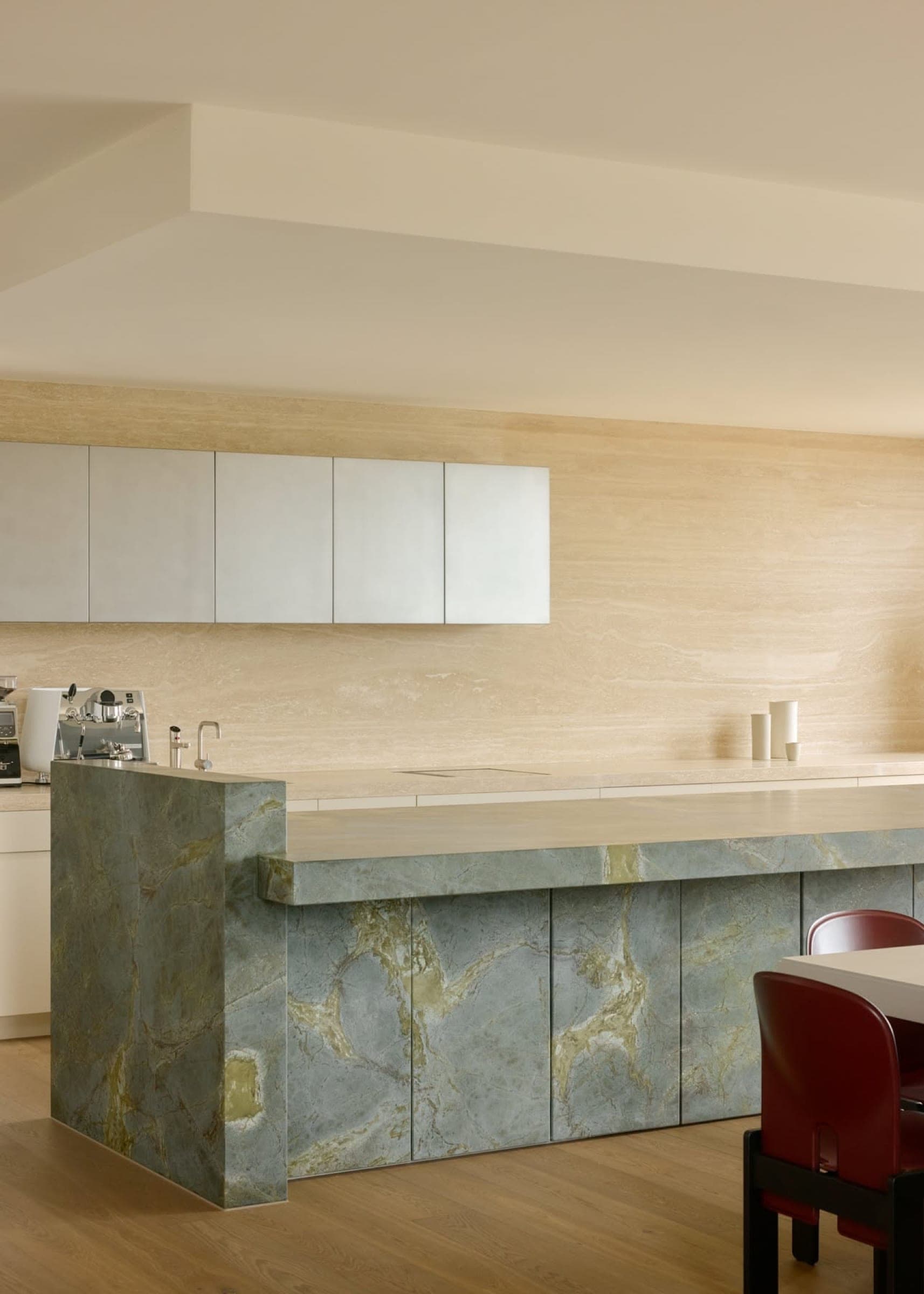
Visit a stone yard and choose the actual slab, not a small sample. Use it in one place, such as the island or the splashback, and keep the rest plain.
Green
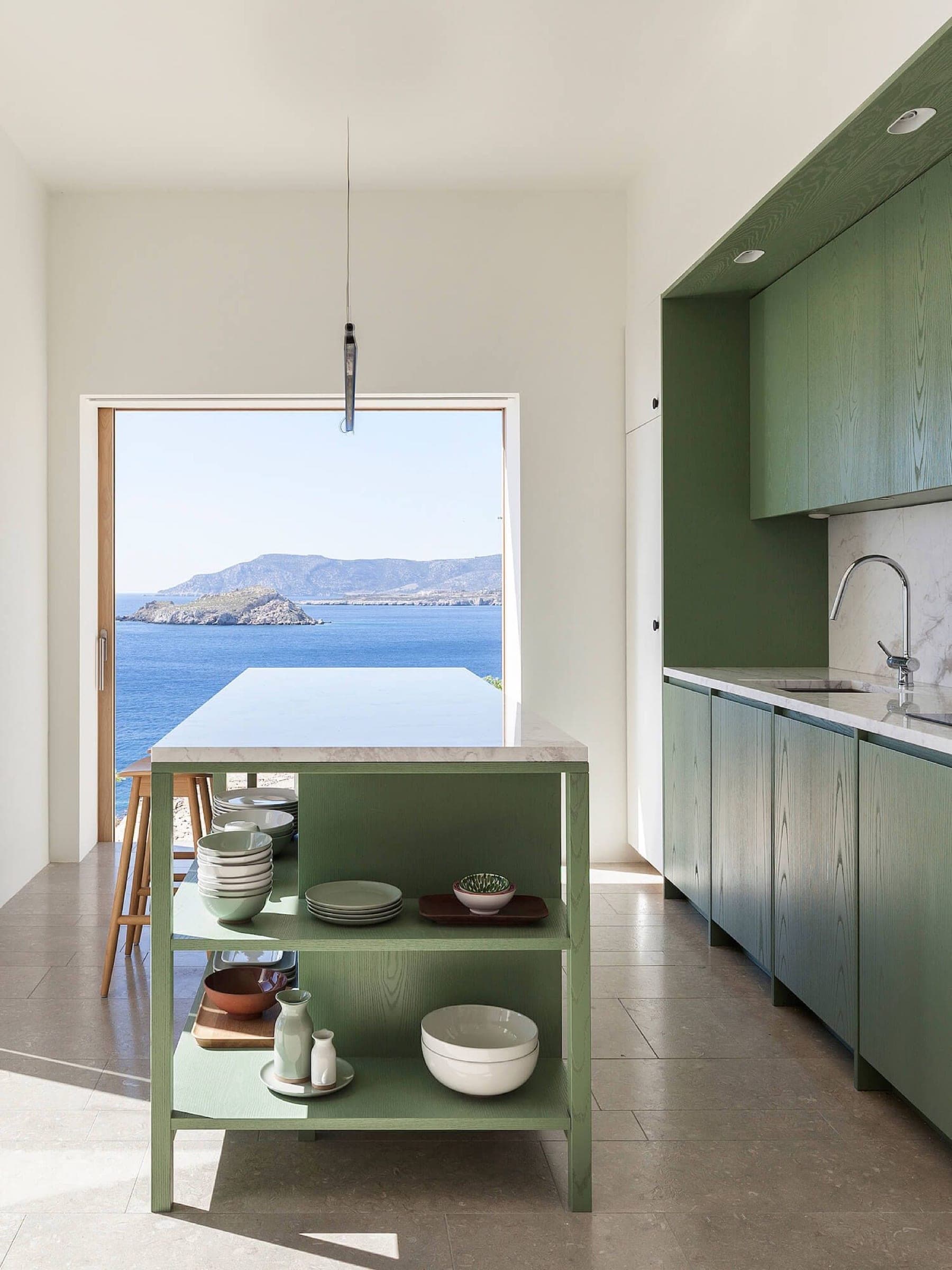
Green is one of the easiest colours to live with after white. It runs from pale sage, which is close to grey, to deep olive and forest.
The paler greens feel almost neutral. The deeper ones feel richer, and they look best next to timber and warm stone.
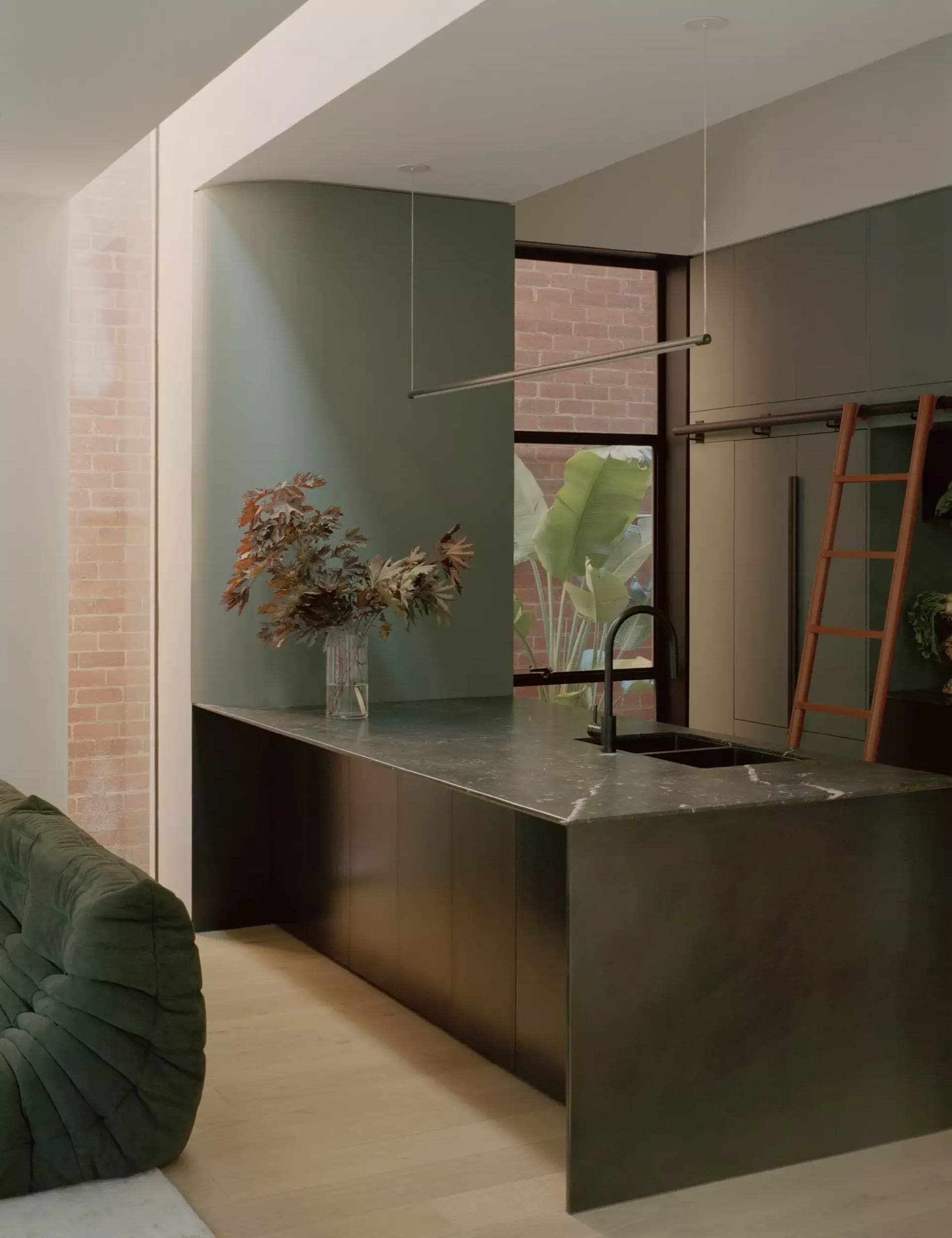
In a kitchen with a window, green brings the trees outside a little closer. It also hides small marks better than white.
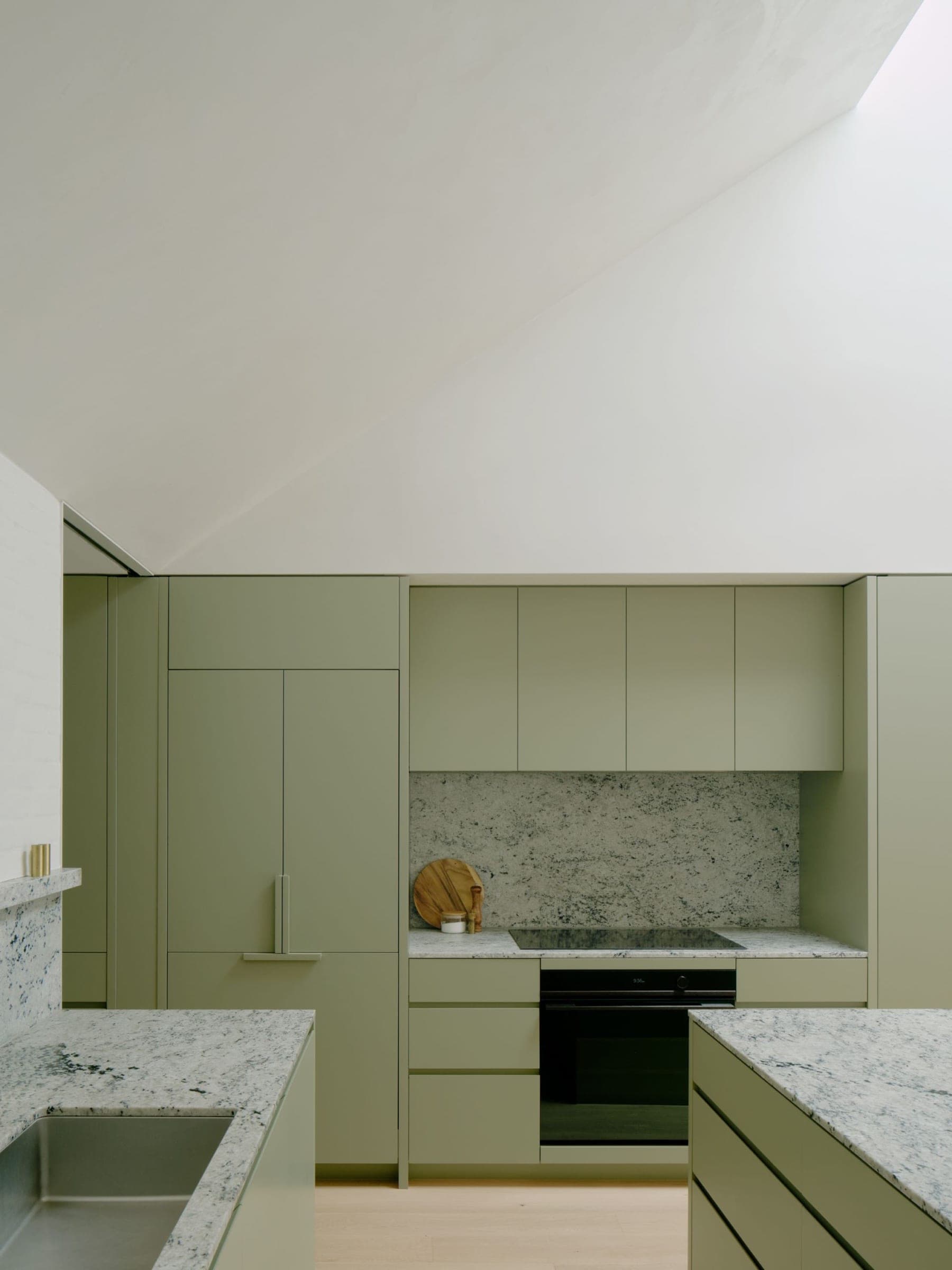
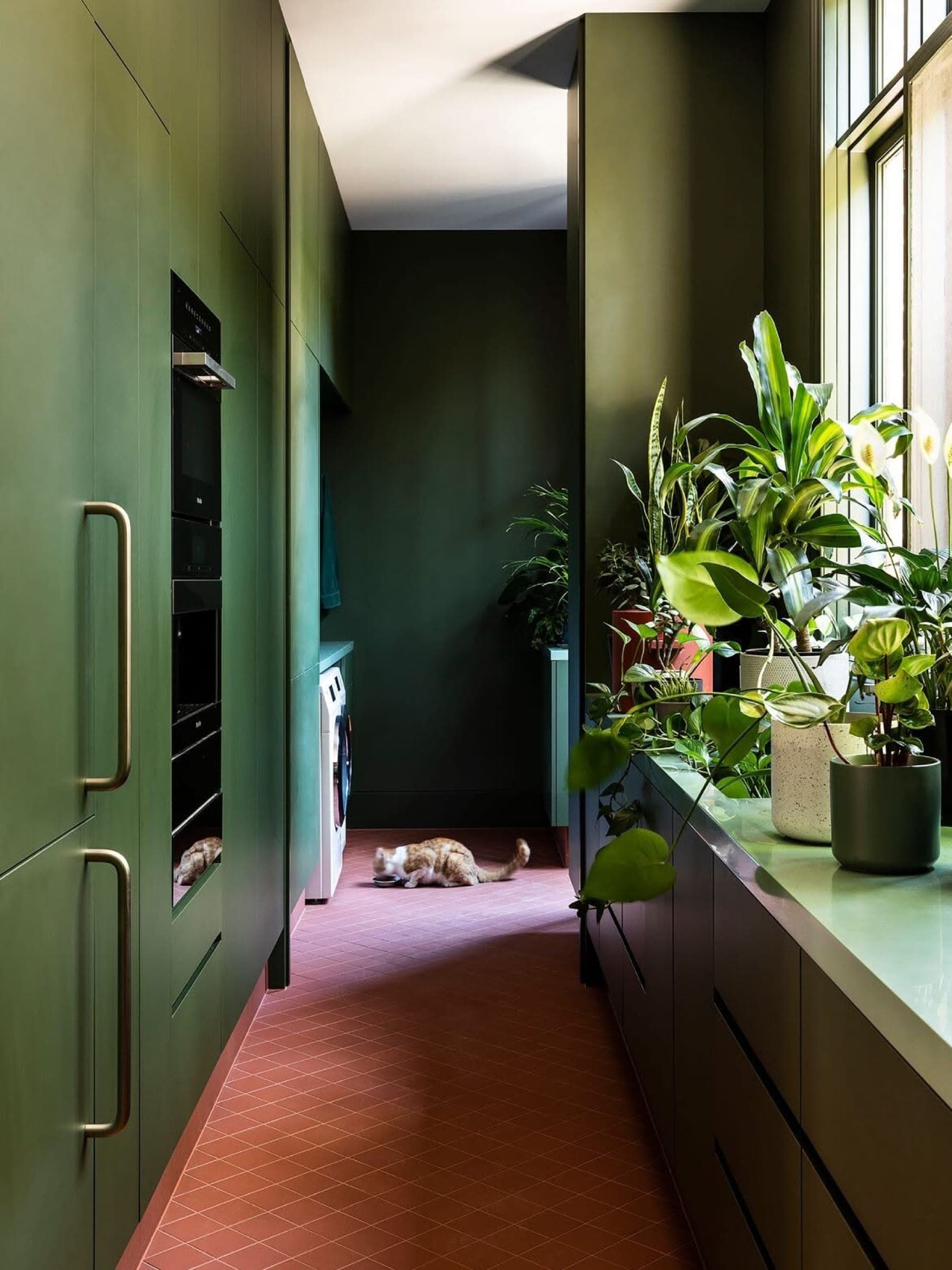
Try a matt green on the doors with a pale counter. Look at the paint samples in your own kitchen in the morning and at night, because green changes a lot under warm lights.
Stainless Steel
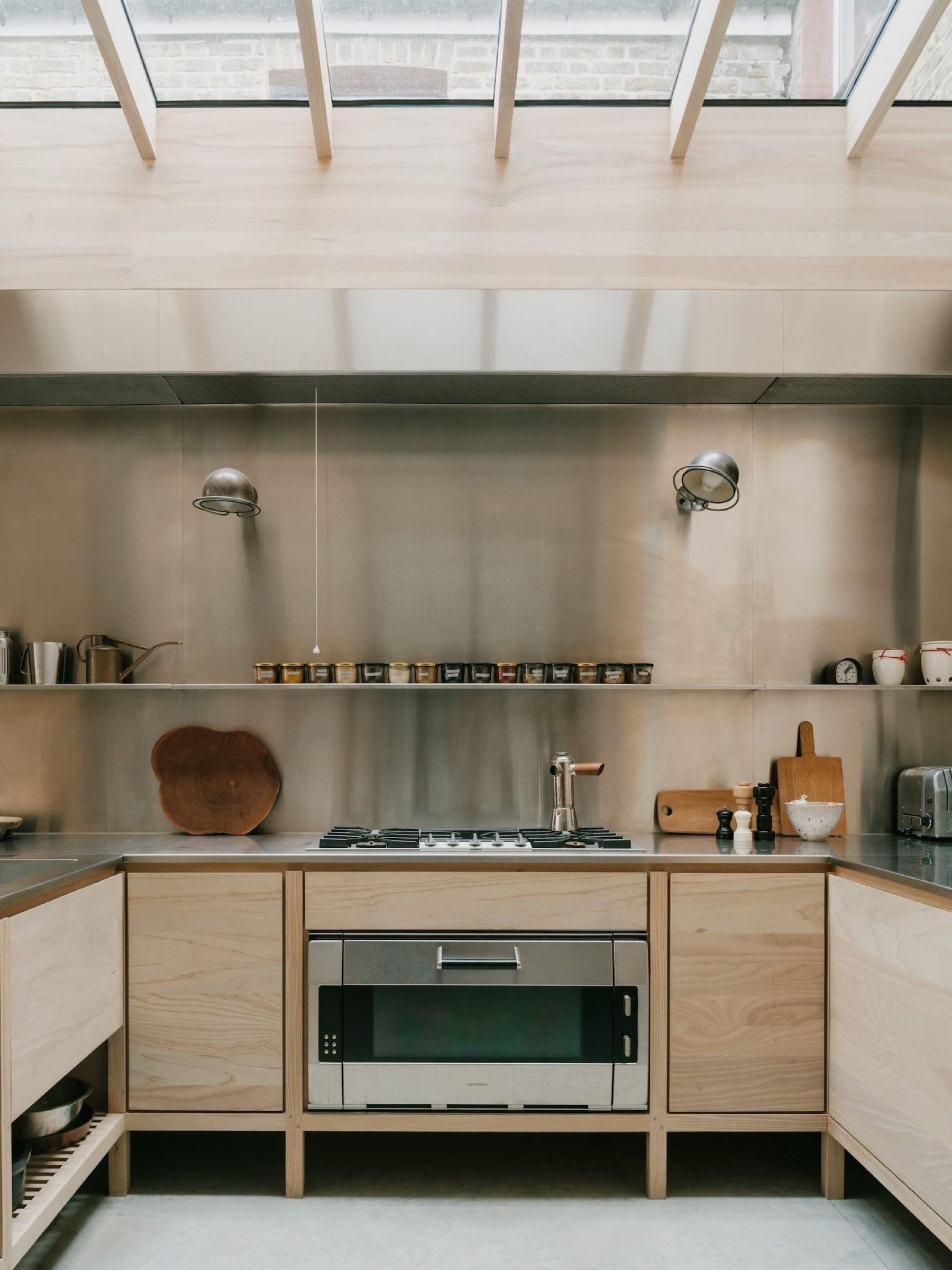
Restaurant kitchens are built from stainless steel because it is tough and easy to clean. It does not mind heat or water. The same reasons make it a good choice at home.
At home, steel looks best with something softer beside it. The kitchens here pair it with pale timber, plaster and stone.
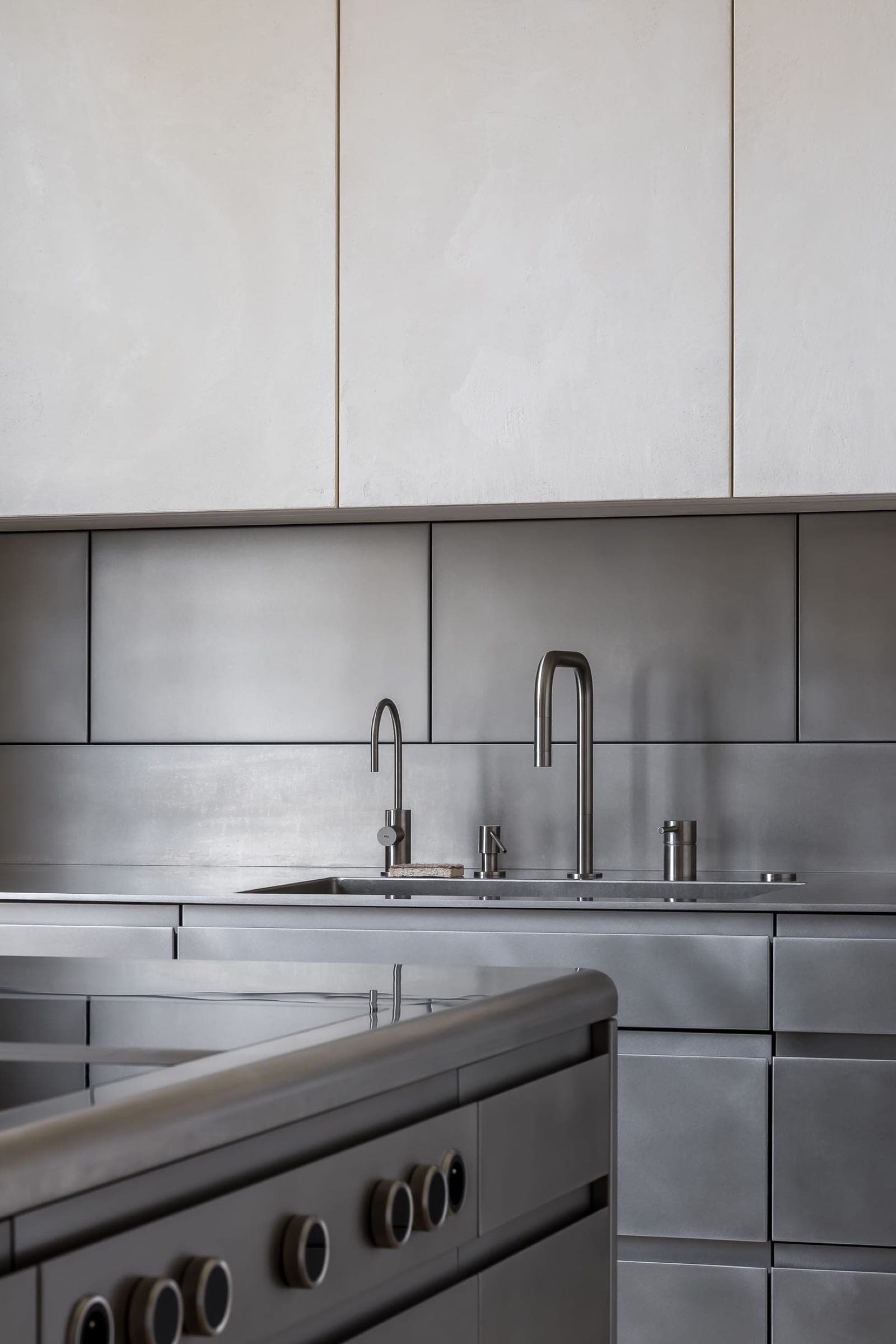
It suits the way many families in Singapore cook. A wok sends oil and steam across the kitchen, and steel wipes clean.
Steel scratches and shows fingerprints. A brushed finish hides both better than a mirror finish, and the small marks soon blend into a soft sheen.
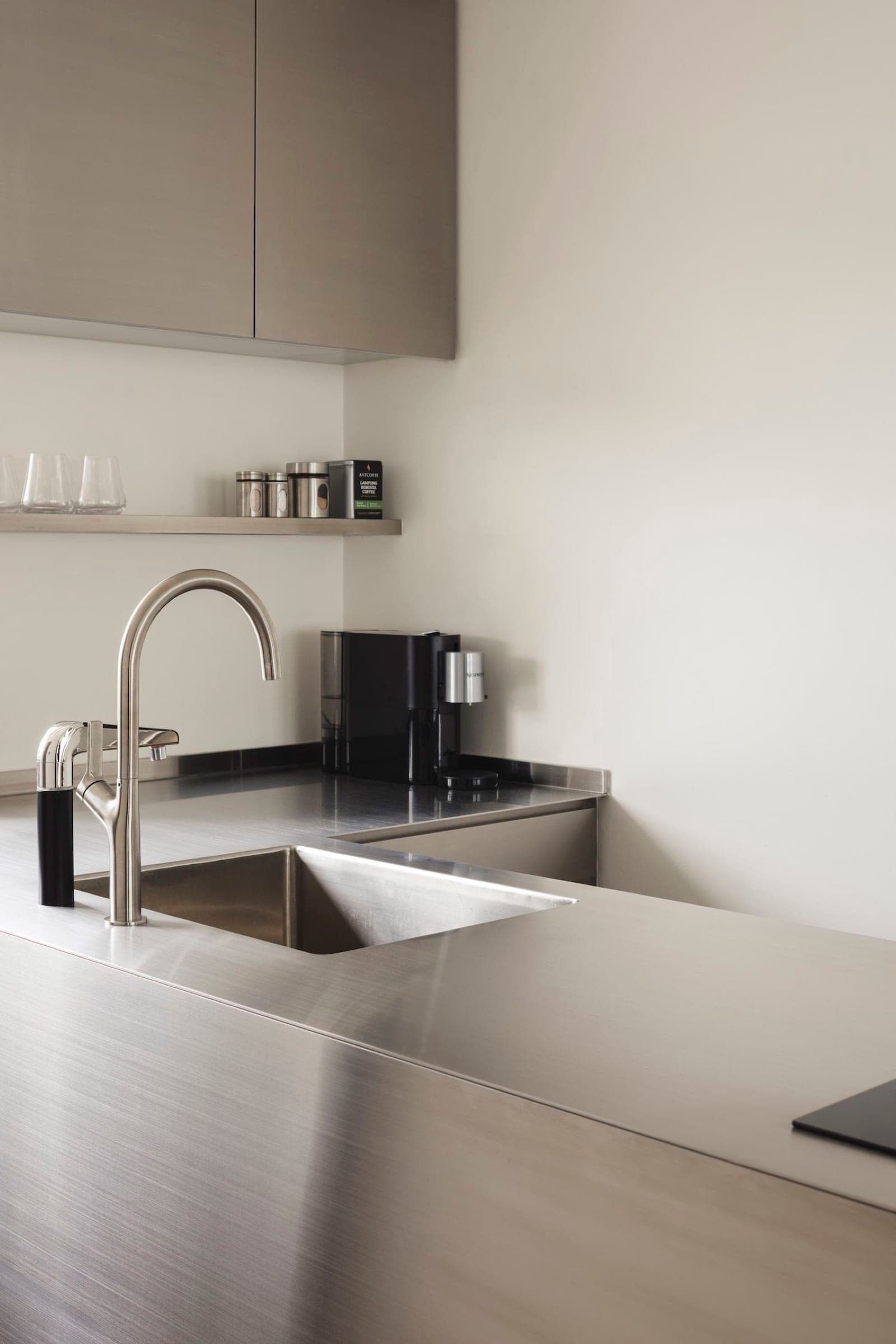
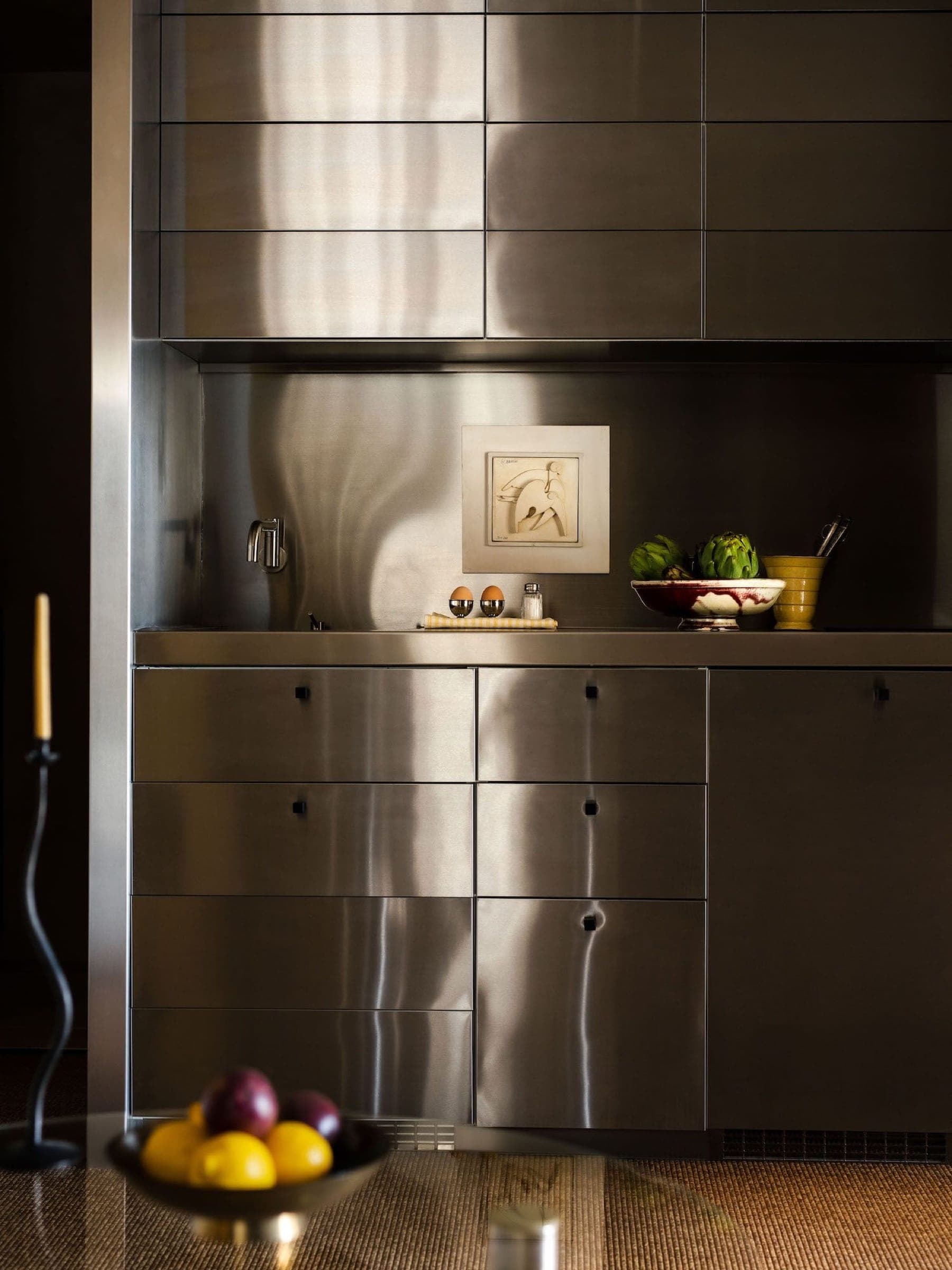
The Joo Chiat apartment shows how it can work in a home here. Start with a steel counter and splashback over timber or painted doors, rather than a kitchen made only of steel.
Navy and Blue
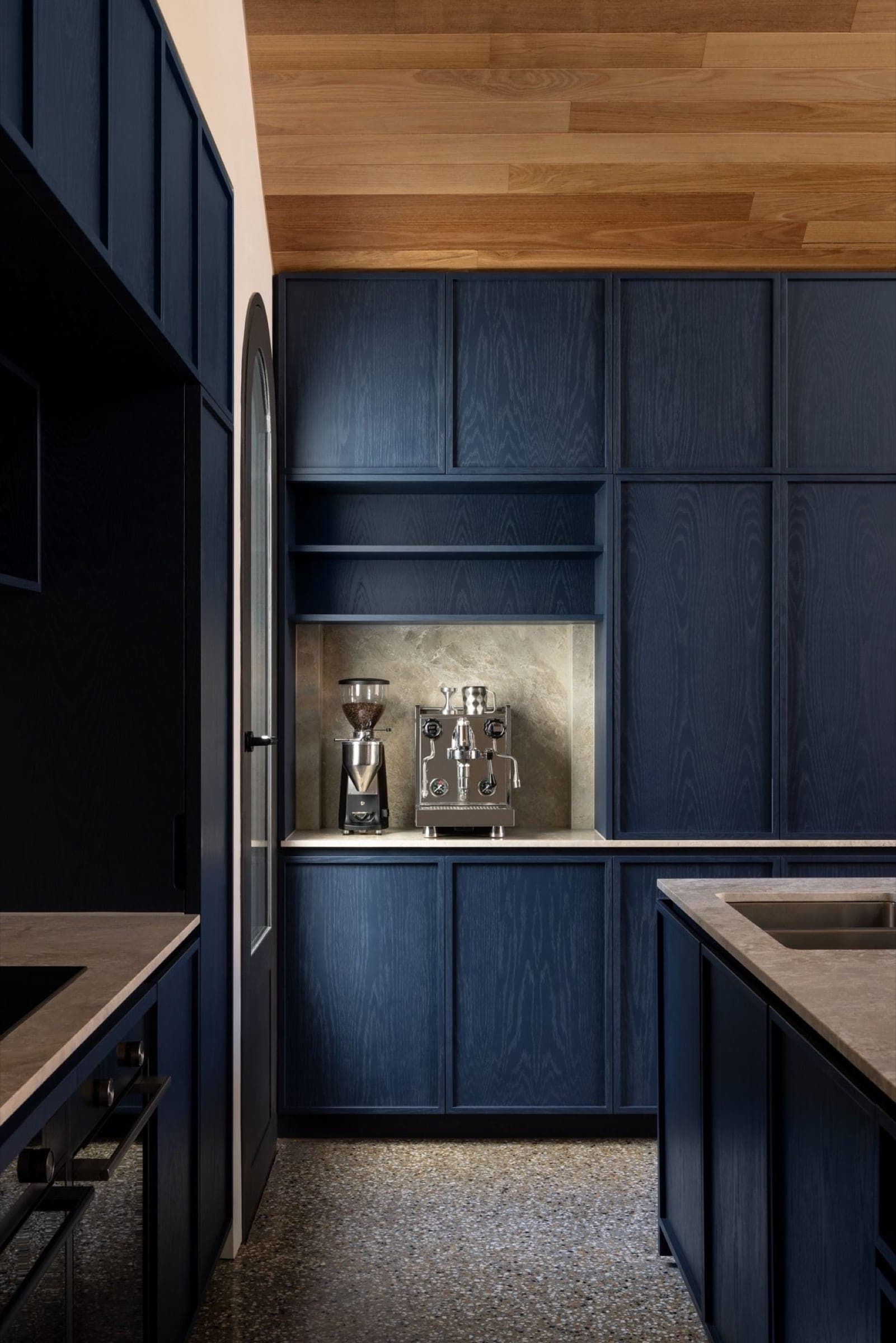
Navy behaves like a neutral. Deep blue doors sit calmly next to timber, steel and white walls, and they hide marks better than white.
The kitchens here run from inky navy to a softer mid blue and teal.
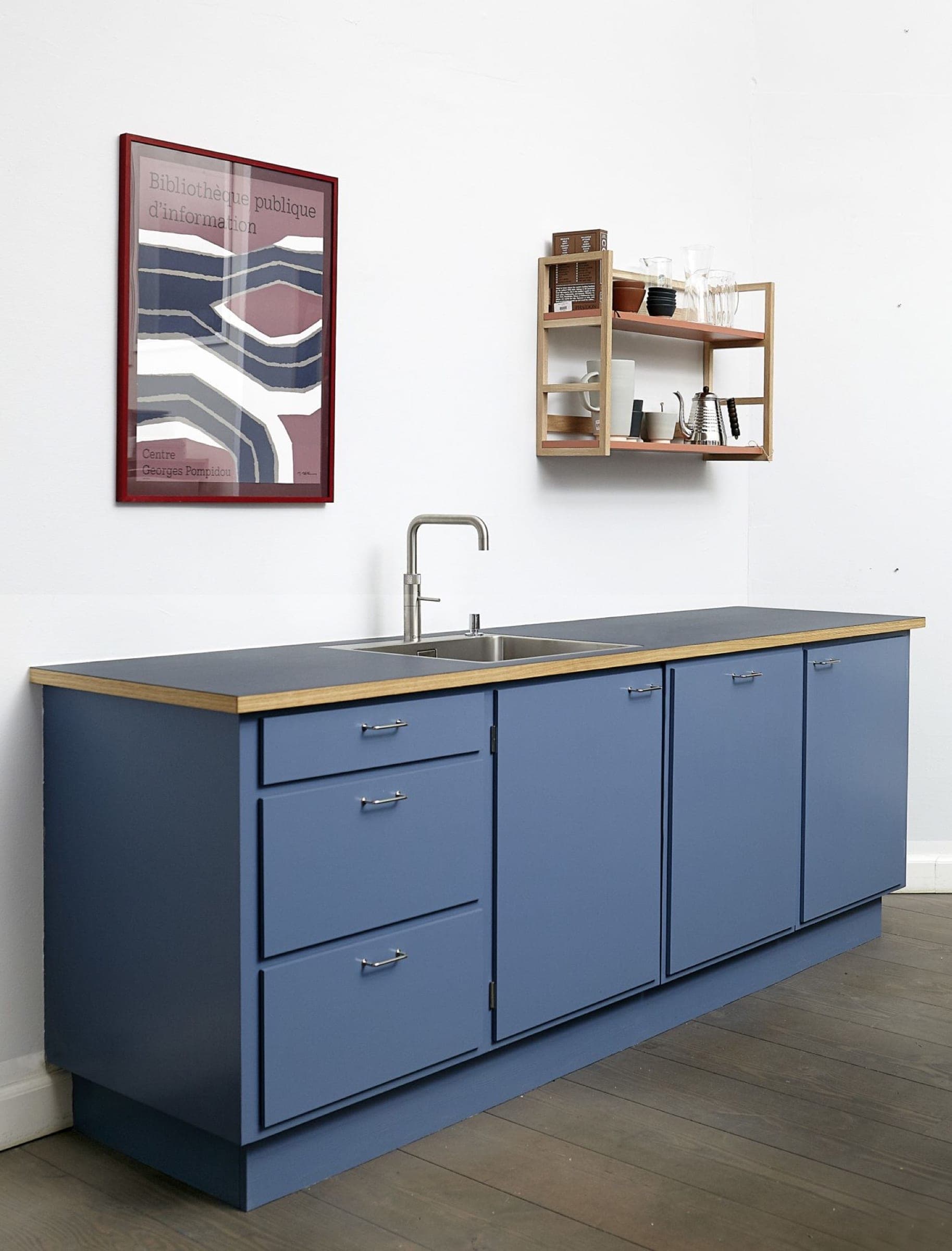
Blue needs something warm near it. A timber floor, a terracotta-red floor or a timber table keeps it from feeling cold.
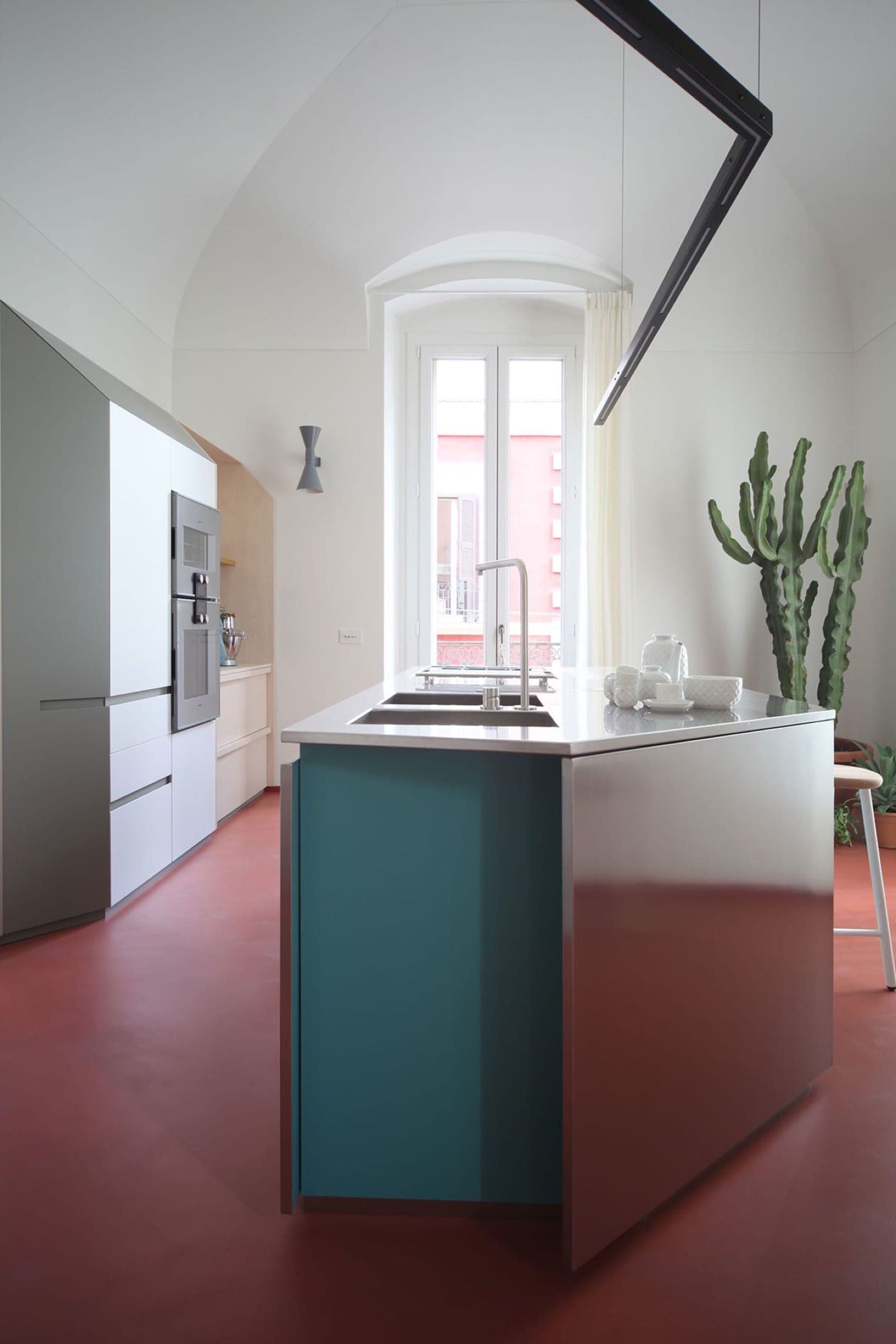
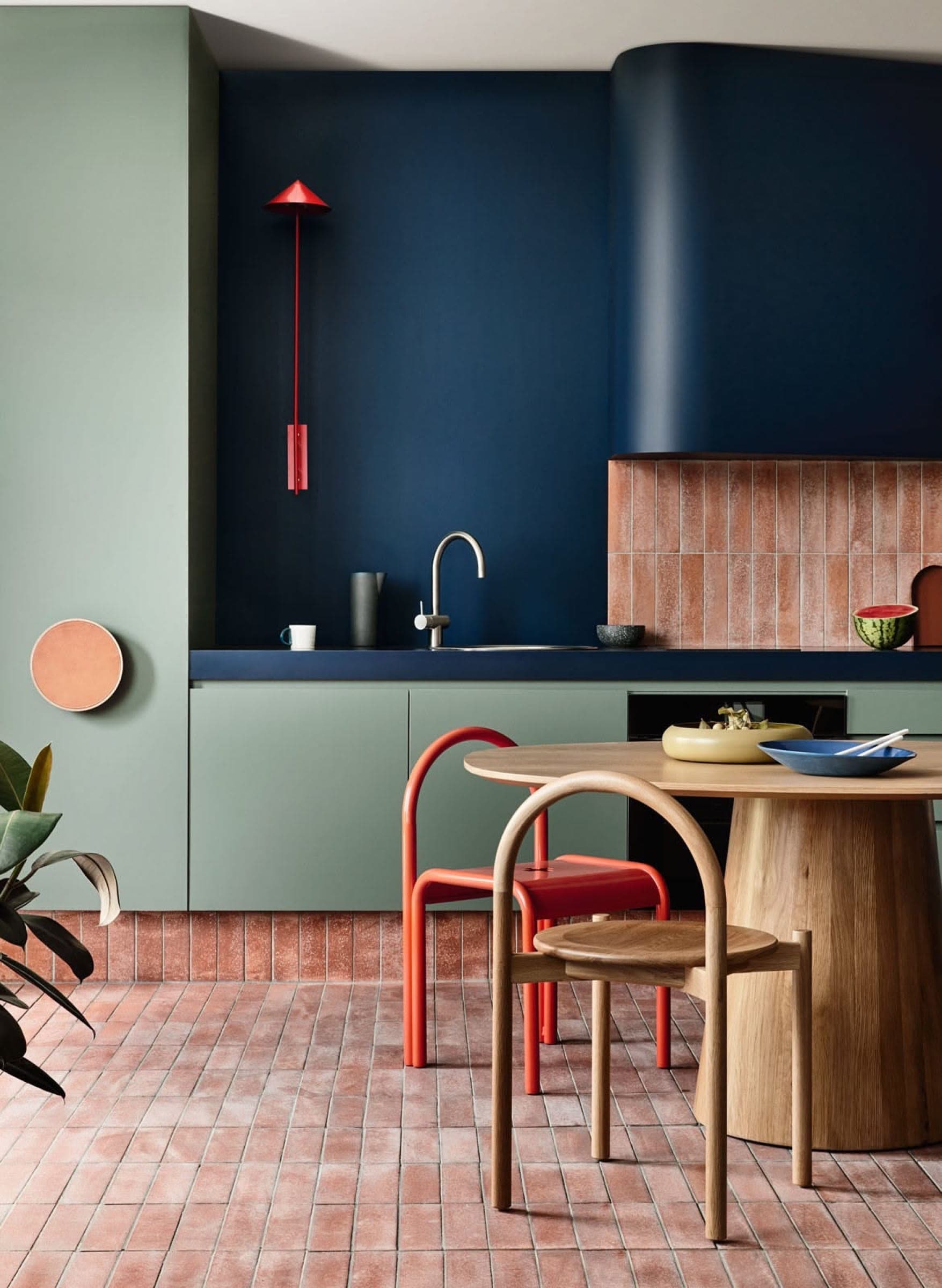
Put navy on the lower cabinets and keep the upper ones pale. In a small kitchen, a blue island or one blue wall is enough.
Black and Charcoal
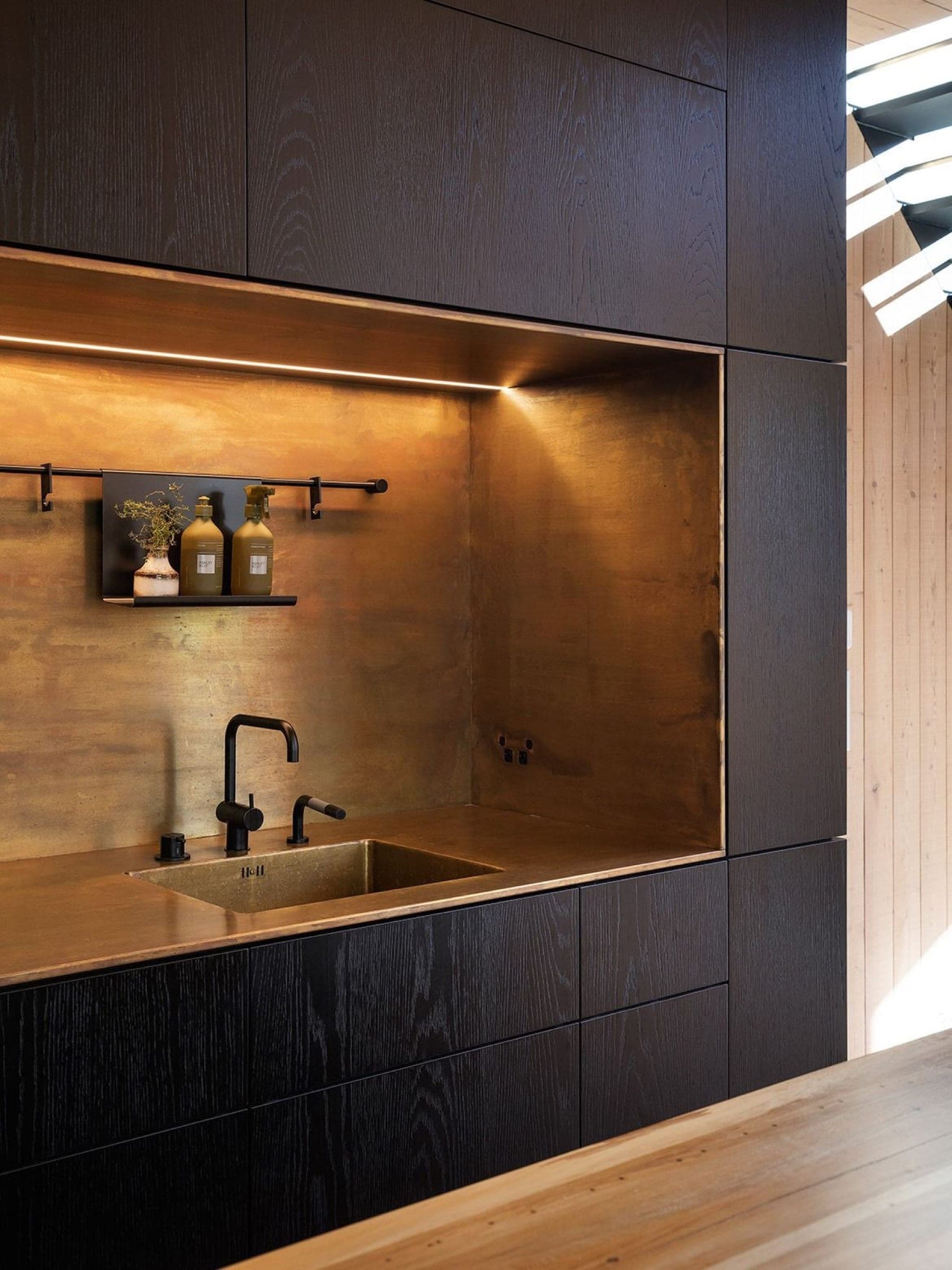
A black kitchen sounds dark, but it can make a room feel calm. Black doors seem to step back, and whatever sits in front of them catches the eye.
The kitchens here use black oak with the grain still showing, charcoal timber and dark stone.
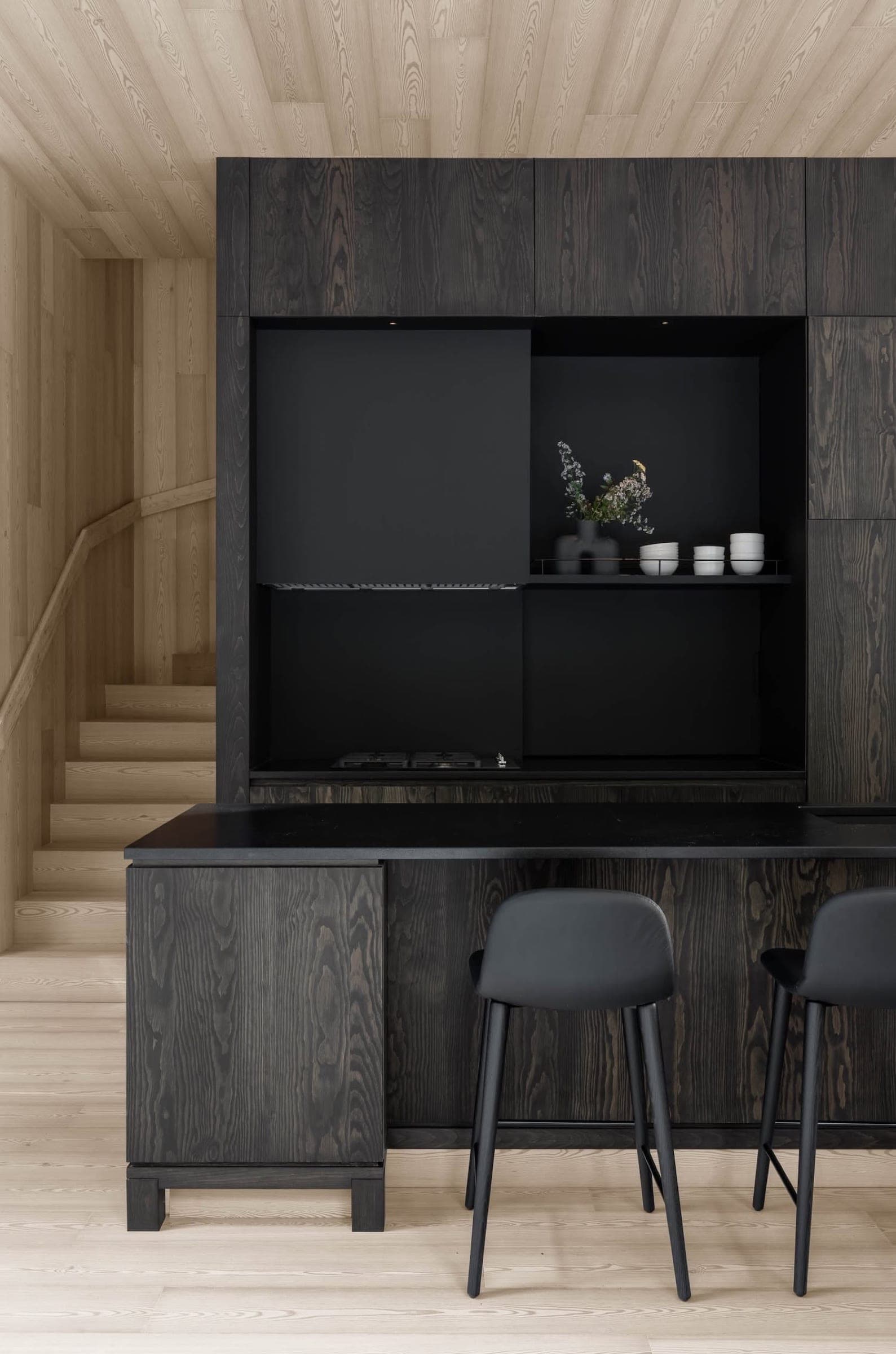
Black needs light. Choose it for a kitchen with a window, or add warm lights under the upper cabinets.
Matt black shows fingerprints. A black timber veneer hides them better than a flat painted door, and some laminates are made to resist them.
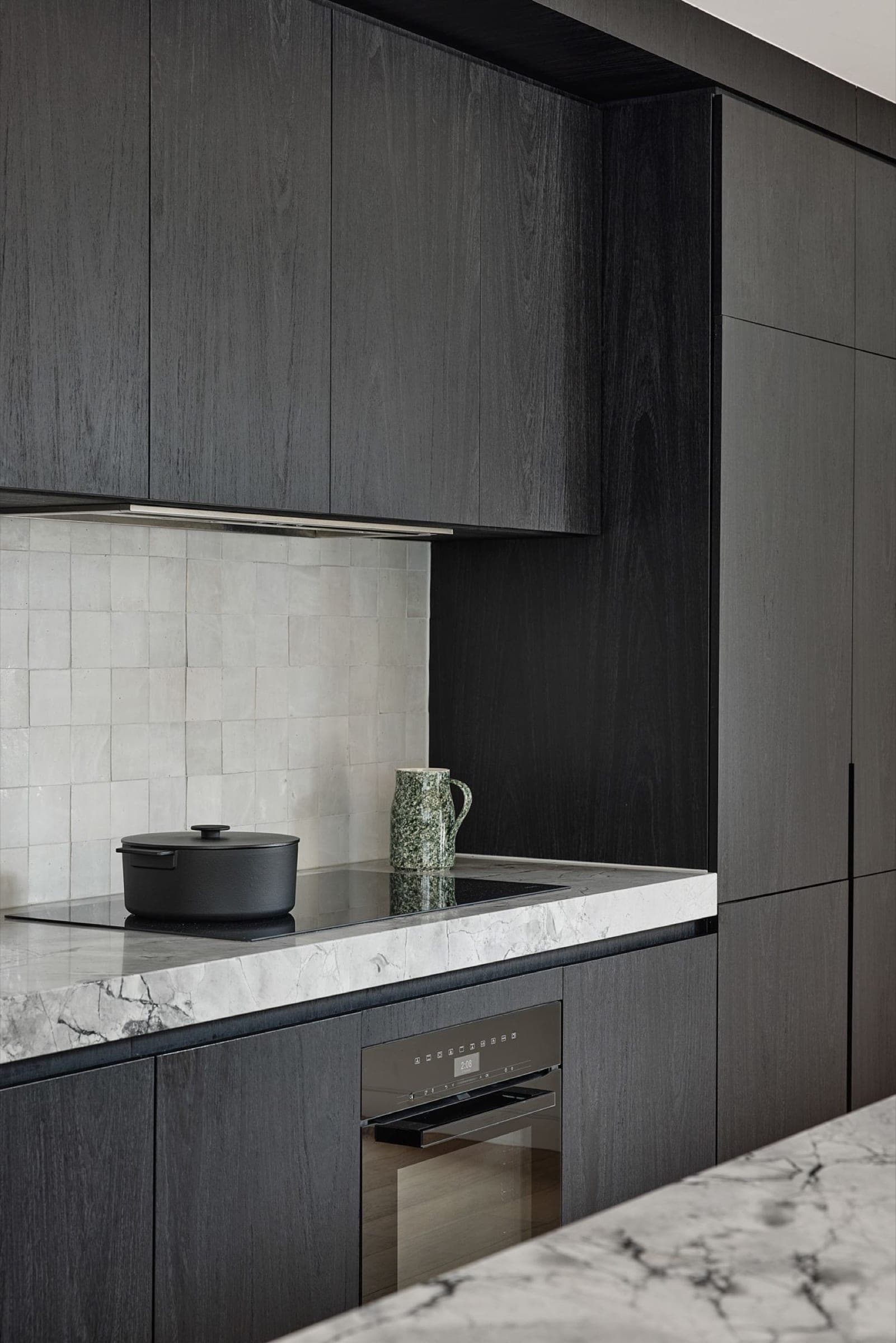
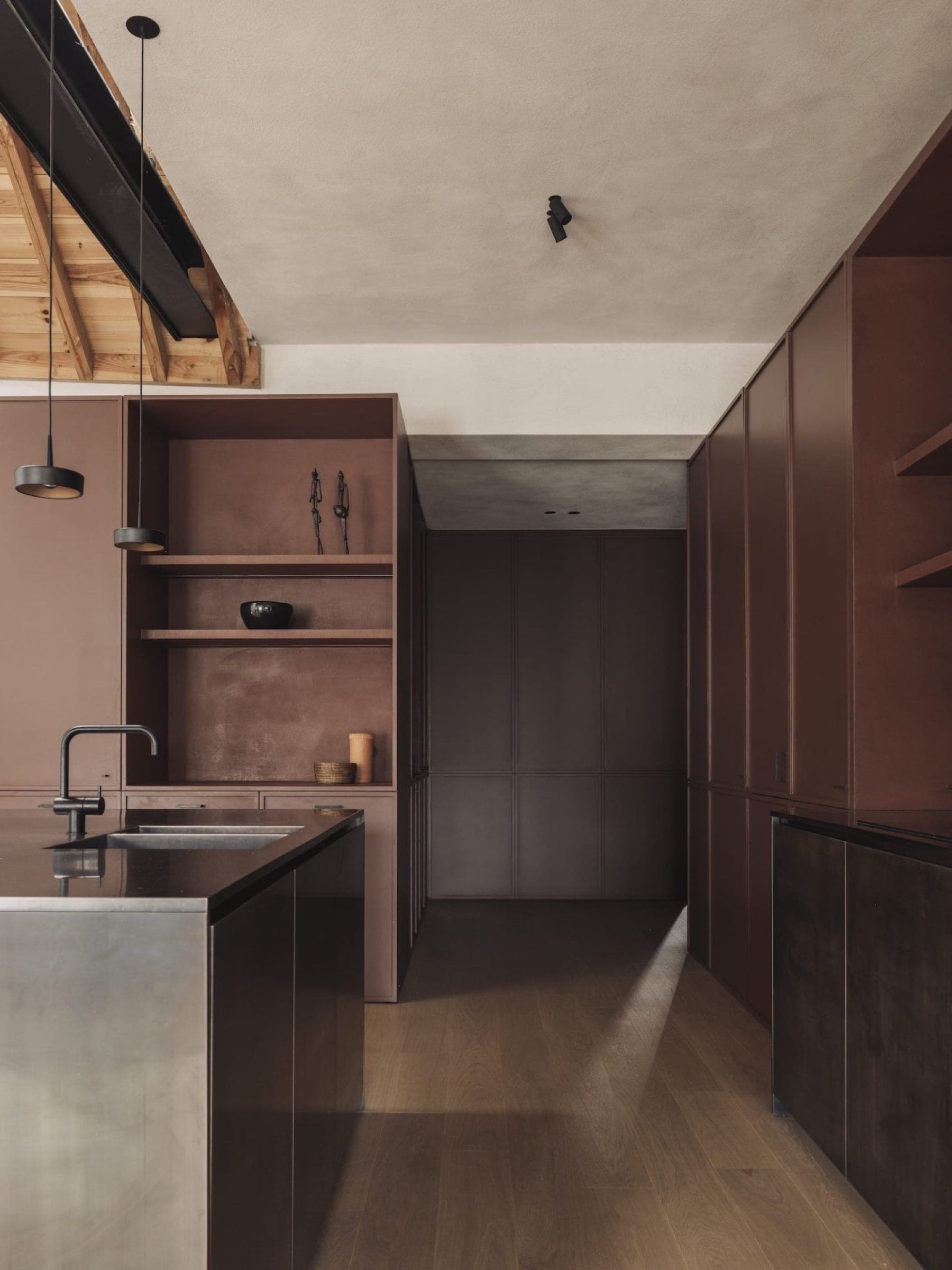
Pair the black doors with one warm material, such as timber shelves or a stone counter. It keeps the kitchen from looking like a showroom.
Before you choose
Most of the kitchens here mix two of these ideas. Walnut sits beside steel, and green doors sit under a stone counter.
Bring home samples of the doors, the counter and the floor, and look at them together in your own kitchen. The light in a flat is not the light in a showroom.